Supreme Court Asks Law Commission to Study Reforms for Faster Execution of Arbitral Awards

Two decades after the award, still no execution: the Supreme Court calls for reform
The Supreme Court has asked the Law Commission of India to review how arbitral awards are enforced in India and suggest changes to ensure they are executed in good time.
A Bench of Justices Vikram Nath, Sandeep Mehta and Aparesh Kumar Singh said that an arbitration system cannot be judged only by how quickly an award is passed or how narrowly it can be challenged. It must also be judged by whether the winning party can actually recover what it is owed within a reasonable period. The Court said that arbitration falls short of its promise if a successful party has to fight a fresh round of litigation just to enforce the award.
The Court asked the Commission to identify practical obstacles to recovery and to consider whether domestic and foreign awards need separate enforcement procedures or a single framework with suitable safeguards. It left the Commission free to recommend legislative or procedural changes in line with the Arbitration and Conciliation Act, 1996 and India's aim of being an arbitration-friendly jurisdiction.
The directions came in Royal Construction Company v. National Projects Construction Corporation, an appeal against an interim order of the Delhi High Court. The dispute arises from an internationally seated arbitration in which an award, denominated in Iraqi Dinars, was passed in the company's favour on August 10, 2002. The Supreme Court restored the award in 2015 and settled a question on the date for currency conversion in October 2023. Execution, however, remained pending before the High Court, which then allowed the parties to return to the Supreme Court for clarifications on certain payments made in Indian Rupees in 2009.
On the wider problem, the Court noted that recent reforms have concentrated on speeding up arbitral hearings and limiting court stays, while execution under Section 36 of the Act deserves closer scrutiny. Awards are enforced like civil court decrees, so they face the usual delays under the Code of Civil Procedure. The Court said that disclosure of the award-debtor's assets, coordination of different modes of execution, disposal of repeated or dilatory objections, and the overall time taken to conclude execution need particular attention.
Source: Bar & Bench (report dated October 28, 2026). Adapted from the original; please refer to Bar & Bench for the full story.
News items are shared by ACI members for information and awareness. They are not legal advice.
More legal news
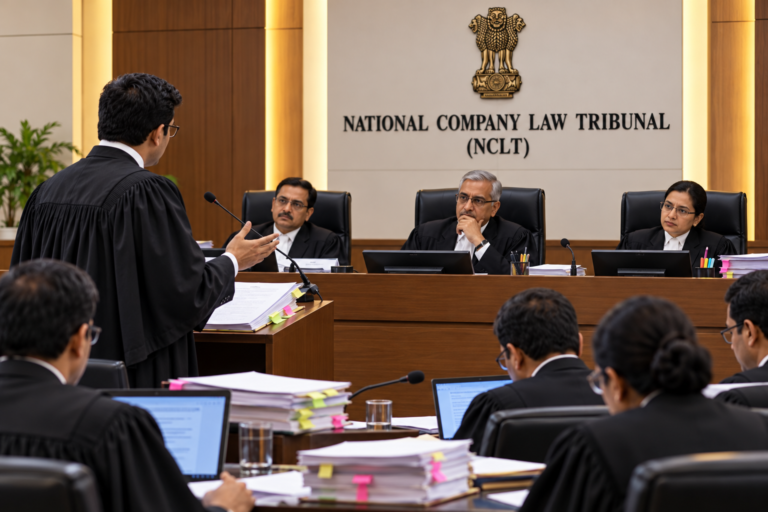
NCLAT Chennai Bench Cautions Senior Advocates Over Long Arguments; Hints at Time Limits
NCLAT Warns Lawyers Against Prolonged Arguments